The Last Fruits of the Garden
Rural Livelihoods & Climate Change
The Last Fruits of the Garden
On Sri Lanka’s rural roads, some of the most revealing climate stories do not begin with a drought map or a government report. They begin with a small table under the shade of a tree.
A few mangoes. A handful of guavas. Bananas, wood apples, papayas, or whatever happened to be ripe that morning. The seller may be an elderly woman sitting quietly beside the road, a farmer who has brought the excess from his home garden, or a husband and wife trying to earn a little extra from the trees around their house.
There is usually no shop sign and often no weighing machine. The price is low because the fruit comes straight from the family’s garden, and the money goes to household food, medicine, school expenses or simply the day’s needs.
For these sellers, the garden is not only a source of food. It is a small informal economy. And that economy is increasingly exposed to something over which they have no control: a changing climate.
The Scope of the Threat
A country of gardens, a climate in flux
Home gardens are not a niche activity in Sri Lanka. A 2022 food security report by FIAN Sri Lanka noted that 61.5% of households in Sri Lanka engage in home gardening, and 87.8% of those are rural home gardens. During the 2022 economic crisis, that same report observed that locally sourced foods such as jackfruit, breadfruit and yams helped ease the pressure of inflation. The garden behind the house was, quite literally, a household’s shock absorber.
In some regions, gardens are also a serious source of cash. Studies of the well-known Kandyan forest gardens have found that they offer economic stability to farmers and provide a significant amount (30–50%) of household income. But the picture is harsher in the north-central plains, where dry zone homegarden systems have a low tree density, and a single tree can carry a large share of a family’s seasonal hopes.
That dry zone is where climate pressure is most intense. According to UNDP, Sri Lanka has been experiencing severe shifts in its seasonal rainfall patterns accompanied by increased flood and drought in the last decade directly impacting rural food security and incomes. The Dry Zone covers 70% of the island’s land area and is the country’s agricultural heartland.
The Rising Heat Across Sri Lanka
The spread of “extreme heat stress” across the island, heavily impacting agricultural cycles.
The warming is measurable. An analysis of 19 weather stations between 1980 and 2015 found that annually averaged mean minimum temperatures are increasing across most of Sri Lanka, with a significant decrease in cold nights and an increase in warm nights. Warmer nights matter for fruit trees, whose flowering often depends on temperature cues. And heat stress is spreading: by 2020, analysis of 30 years of data shows two-thirds of Sri Lanka under “extreme heat stress” in April, a category that was nearly absent in the 1990s.
For a large commercial farmer, a failed harvest is an economic loss. For an elderly roadside seller whose fruit comes from three or four trees behind her house, the loss may be small in rupees but enormous relative to the household’s ability to cope.
A livelihood measured in baskets, not hectares
The climate vulnerability of small roadside sellers is easy to overlook because their economic activity is tiny. They may not own large farms, employ workers, or appear in agricultural statistics as commercial producers. Yet their livelihoods depend directly on rainfall, soil moisture, temperature, flowering seasons, pollination, water and the health of a handful of trees.
A mango tree that bears heavily can provide a seasonal income. A guava tree can supply fruit for weeks. A banana patch can offer steadier cash. A few papaya trees can top up the household budget. When the garden produces, the family eats some and sells the surplus. When production falls, food and income disappear together.
“Before, we knew roughly when the rain would come. Now we wait, and sometimes it comes late. Sometimes it comes heavily, and sometimes there is no rain at all.”
“The rain used to come when we expected it”
This is where the voices of elderly sellers become particularly important. Many older farmers carry detailed knowledge of the seasons: when particular trees flowered, when rains normally arrived, when fruits came into season, when planting could safely begin.
Sri Lankan farming communities historically read environmental signals to time their work, but changing weather patterns are making those signals less dependable. The value of such statements is not scientific precision. It is the lived experience behind it. Sellers are measuring climate variability in the only unit that matters immediately: whether their trees produce enough to sell.
The data broadly support them. Rainfall trends in Sri Lanka are uneven rather than simply declining. More rain on average does not mean more reliable rain. It can mean heavier bursts separated by longer dry spells, which is exactly the pattern older sellers describe.
The drought that showed what is at stake
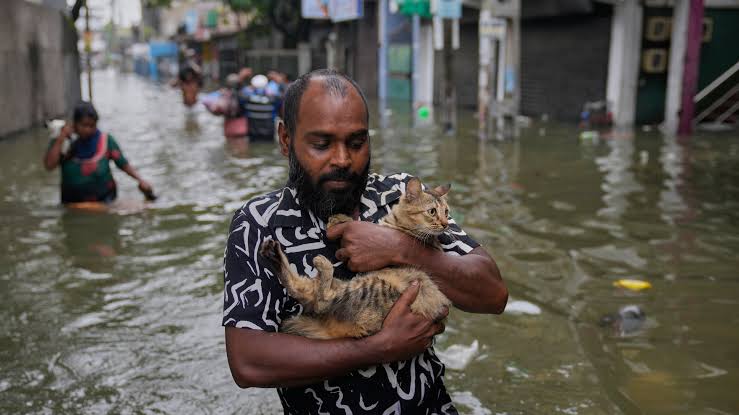
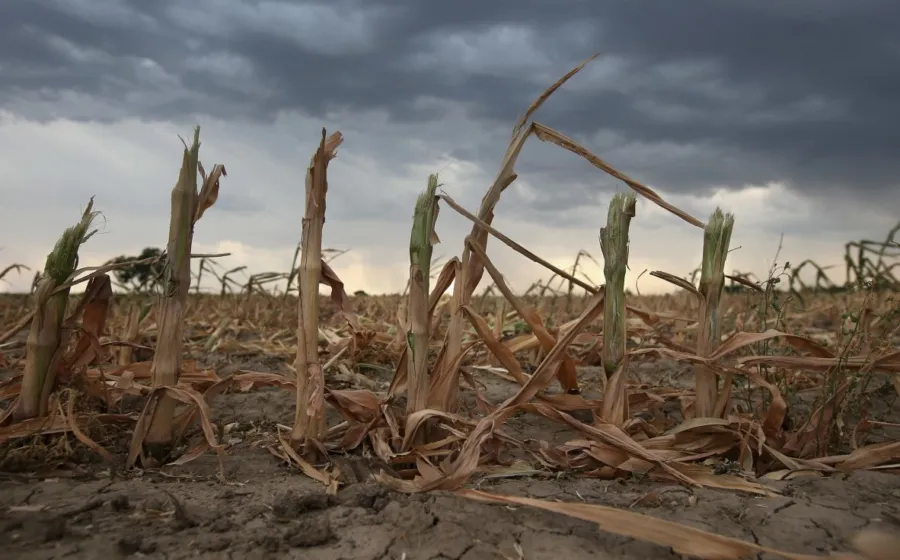
Sri Lanka has already had a preview of how a prolonged drought ripples through rural households. UNDP describes how the Dry Zone has experienced some of the worst droughts in the island’s history, with the 2016 drought continuing for almost two years. By January 2017, approximately 1 million people had been affected.
When a garden fails, the household loses its fruit income and must also start buying food it once grew, at precisely the moment prices are rising.
The women sitting beside the road
Women are central to this story. Across rural Sri Lanka, women play a major role in home gardening, minor crop cultivation, food preparation, seed conservation and passing on agricultural knowledge, yet often remain invisible in national data and policy.
They also carry the water. When a woman must choose between water for the kitchen and water for a mango tree, the tree usually loses. For some women, especially older women and those managing households on limited income, selling garden produce provides a measure of financial independence. A few thousand rupees from fruit can pay for groceries, medicine or bus fare.
An Ageing Countryside
The proportion of the elderly population in Sri Lanka is rising sharply, leaving more older, informal workers exposed to environmental shocks.
An ageing countryside
The roadside seller is increasingly likely to be old. According to the 2024 census, the elderly population grew from 6.6 per cent in 1981 to 18 per cent by 2024, reaching nearly 4 million people. Analysts expect that share to rise to one in four by 2041, and warn that low labour force participation, inadequate pensions, and a lack of care services are deepening the vulnerability of older people.
The price of a fruit is not the cost of producing it
The fruit may look cheap. A passer-by buys several mangoes without a second thought. But the price rarely reflects the months of watering, weeding, protecting trees, harvesting and carrying produce to the road. Much of that is unpaid household labour, and when climate conditions cut production, the labour does not disappear.
The silent toll of food waste
Fruit is highly perishable. A review of Sri Lanka’s supply chains estimated post-harvest losses at 30% to 40% for fruits. A roadside seller has no cold storage. Heat accelerates spoilage, so a warming climate quietly raises the cost of every unsold basket. The climate story is also a food-waste story.
The economics of selling cheaply
There is a paradox at the heart of the roadside trade. Sellers can sell cheaply because their costs are low. But when drought or erratic weather cuts production, they cannot raise prices enough to compensate, because customers simply drive on.
Sri Lanka’s first Multidimensional Vulnerability Index found that water is the second greatest contributor to vulnerability after household debt. Water and debt are exactly the two pressures that shape a garden seller’s life. Their vulnerability is therefore not only a production problem. It is a market problem.
The women who adapt quietly
Climate adaptation is usually discussed through big projects. But adaptation also happens quietly. A woman changes the crop she grows. A family starts collecting rainwater. An elderly farmer drops a thirsty crop. A seller moves to a busier stretch of road.
The story of J.M.P. Chandralatha in Galgamuwa shows adaptation supported. Through a UNDP-supported programme, she grew potted chilli plants, earning premium prices during droughts because scarcity worked in her favour. The crucial detail is not only the drought-tolerant garden, but that she joined a community-managed marketing network, solving the market problem isolated sellers face.
A climate story hiding beside the road
The most important climate stories are not always found in places labelled “climate hotspots.” Sometimes they sit quietly beside a rural road.
An elderly woman with a basket of mangoes may be telling a story about rainfall. A man selling guava may be describing a shifting fruiting season. A woman selling bananas may be using a home garden to replace lost farm income. Together, they reveal how a rural economy is changing.
There is no climate model on the table beside her. There is only what she managed to harvest. That is why these voices deserve a place in Sri Lanka’s climate conversation. When environmental conditions change, the consequences travel all the way from rainfall and soil to the basket on the roadside, and ultimately to the household depending on what is inside it.